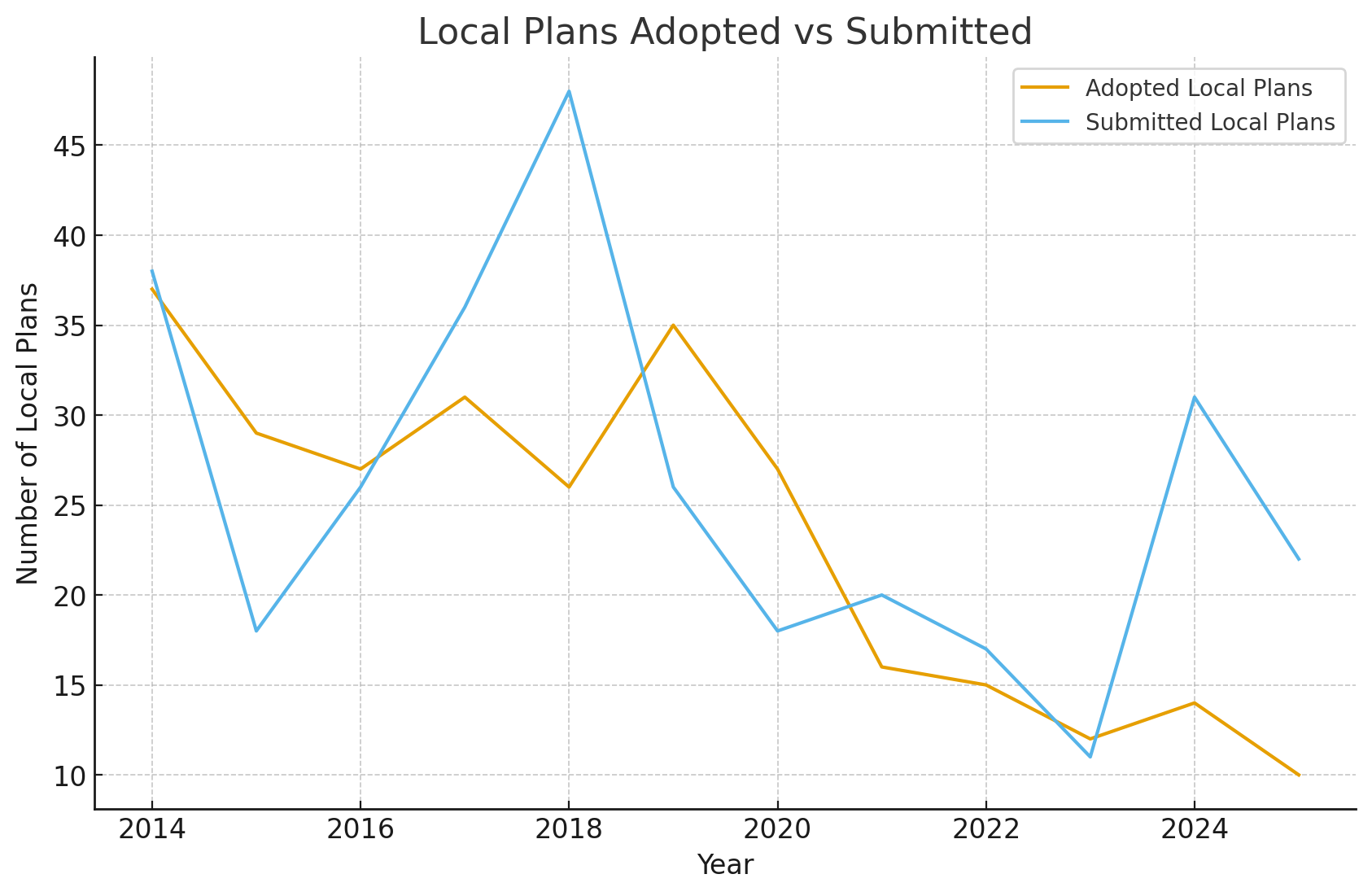
The Coming Submission Surge Towards 2026?
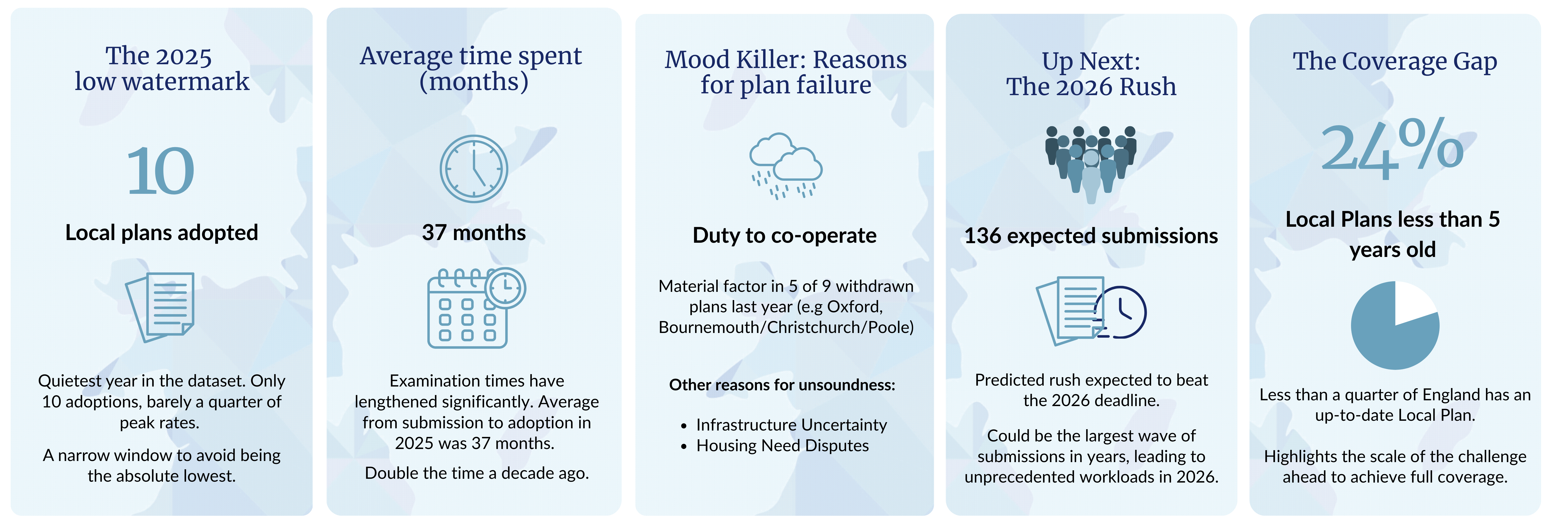
This pleasant trickle could turn into a raging current though. In June, the Planning Inspectorate indicated that it expects 147 plans to be submitted by the end of 2026. The Government recently announced that this is the deadline for Local Plans to be considered under the current framework before shifting to the 30 month plan system. Only 11 Local Plans have been submitted since that projection was published, so presumably that leaves 136 expected next year. Many of those projected authorities will struggle to meet this target and already many are now publicly stating that the December 2026 deadline will come too soon for them. Even if only half of the projected total is submitted, it would still represent the largest wave of Local Plan submissions we’ve seen for some time. As a result, 2026 is likely to see an unprecedented volume of consultations (many of those 136 authorities have not been through the Regulation 19 stage) and exceptionally high workloads for Planning Inspectors and Programme Officers in 2027 as those Local Plans work their way through the system.
Examinations Are Taking Longer Than Ever
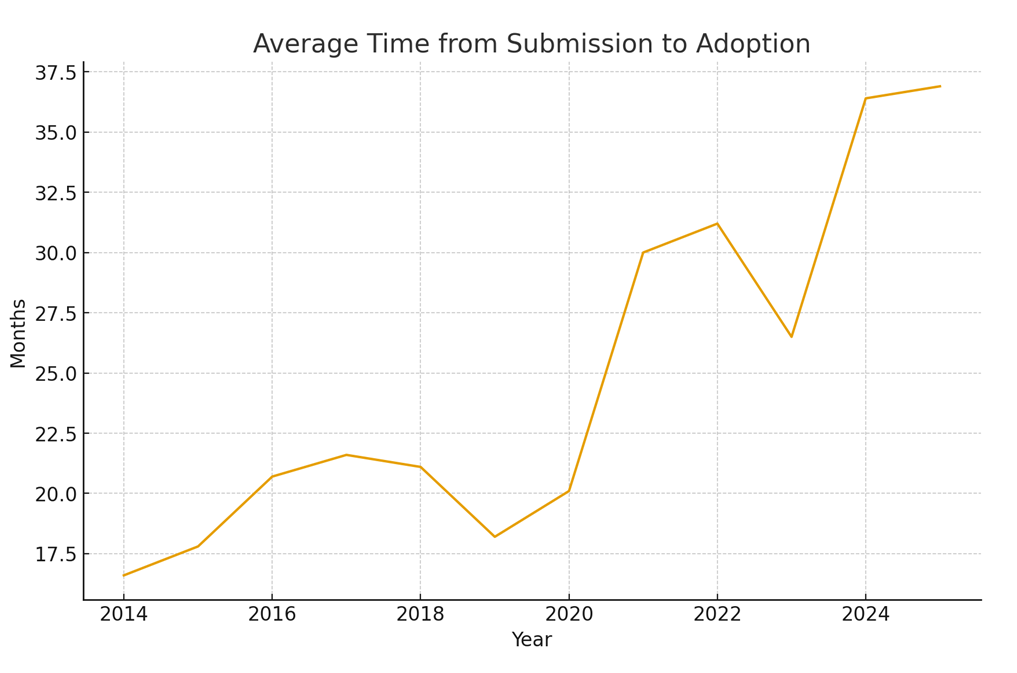
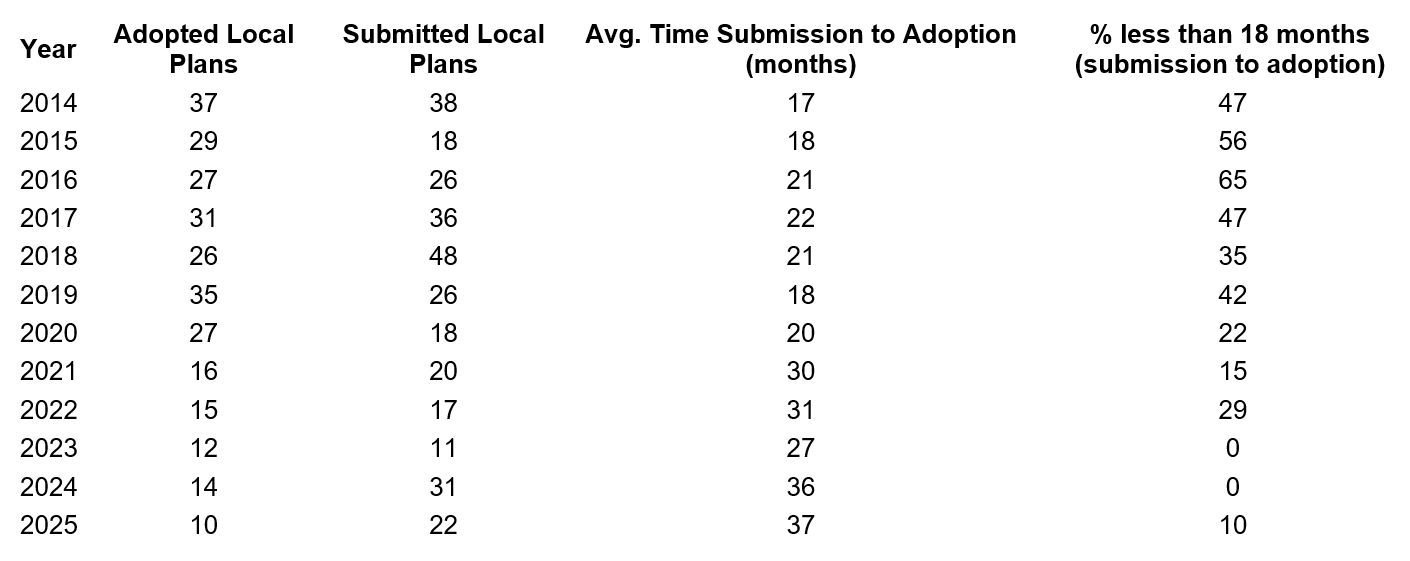
While submissions are increasing, the time taken to move from submission to adoption has deteriorated sharply. The second chart illustrates this clearly. A decade ago, around half of all examinations that reached adoption were completed in under 18 months. In the last three years, only one authority has managed to achieve that benchmark (hats off to you, West Suffolk). The current average time from submission to adoption is now approximately 37 months, double the typical timescales seen in the mid-2010s.
What Is Driving Unsound and Withdrawn Plans
The longest running examination currently in the system is Rutland, which will reach its fifth anniversary in February next year. That scale of delay is now unlikely to be repeated following the July 2024 Pennycook letter, which introduced a firm expectation that authorities should be given no more than six months to resolve fundamental issues identified during examination.
Life After the Duty to Co-operate
Soundness outcomes also paint a revealing picture of systemic stress. Nine Local Plans were withdrawn or recommended for withdrawal last year, either formally or through Inspector conclusions. The statutory Duty to Co-operate was a material factor in five of those cases, including Oxford City, Bournemouth Christchurch and Poole, Oxfordshire/Vale of White Horse, Horsham and Mid Sussex. Infrastructure uncertainty underpinned the withdrawal of plans at Bedford and Stroud. Disputes over the approach to housing need were central to difficulties at Shropshire and Elmbridge.
Why This Still Matters for Strategic Planning
The forthcoming removal of the statutory Duty to Co-operate is likely to reduce the number of plans that fail on purely procedural grounds. The NPPF requirement to demonstrate that cross-boundary housing need has been addressed remains in force, and this will continue to be used as part of the test of soundness in practice. The potential reopening of the South Oxfordshire/Vale of White Horse and Horsham examinations will be a test case as to whether this watering down will make it easier for plans to be declared sound.
From Low Coverage to Potential Overload
Looking at; the number of Local Plans now in the system; the many more on the way; and, the watering down of the biggest barrier to soundness coverage, it is easy to see how we could rise rapidly from the current low watermark of 24 percent Local Plan coverage nationally. How high we can go will depend on the number of plans that can be submitted before the end of 2026, when a new system is likely to cause a cliff edge of submissions, and on the robustness of these submissions. Authorities will be under severe pressure to get local plans in and this may mean not all evidence bases will be watertight. Set against this, we will have Local Plan Inspectors weighed down by huge workloads and instructed not to give authorities longer than six months to resolve any post-submission issues. Our 2026 Wrapped could paint a very different picture.