Improving exemptions
1. All development types up to 0.2 ha will be exempt
This area based exemption is based on the area within the redline boundary. The exemption does not apply where on-site priority habitats are impacted. The government expect this change will exempt 50% of residential planning permissions.
2. Removal of exemption for small scale self-build and custom build development
These types of development are expected to fall under the exemption for developments up to 0.2 ha mentioned above.
3. De minimis exemption will continue to apply for the time being
Pending the government response to the residential brownfield consultation which proposes a low impact based exemption to cover development such as change of use applications, installation of solar panels on an industrial building, replacement of a petrol station with an electric vehicle charging station, and an upward extension of a large block of flats.
4. New exemptions for:
● Development whose primary objective is to conserve or enhance biodiversity – an appropriate definition and accompanying guidance with be provided by Defra in due course.
● Development enhancing parks, playing fields and public gardens, where no on-site priority habitat is impacted. The exemption does not apply to professional sporting clubs.
● Temporary planning permissions only where the whole development comprises solely of temporary development up to 5 years.
Streamlining the BNG metric process
1. Digitalising the metric
This should make the metric more accessible, user-friendly, reliable and data-driven for all users, and may also include interactive mapping options. Defra will consider how best to develop the digital metric to support SME developers, including competency requirements and additional guidance needs for small sites.
2. Transitionary arrangements for changes to the metric
Clear guidance will be provided on which metric version can be used for planning applications and gain site registrations, along with a defined period during which previous versions may continue to be accepted.
Increasing flexibility to go off-site
1. Relaxation of the biodiversity gain hierarchy for minor development
On-site and off-site BNG will have the same preference, and statutory credits will remain as a last resort option.
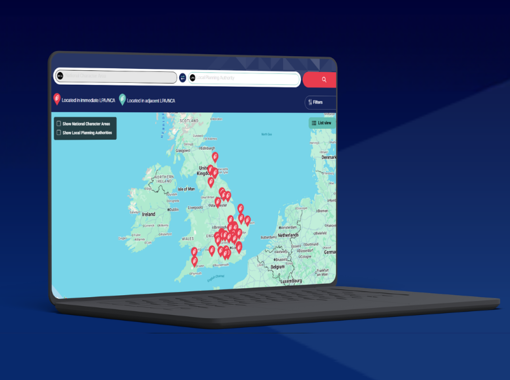
2. Spatial risk will be based on LNRS areas only
Spatial risk for all developments will be based on the Local Nature Recovery Strategy (LNRS) areas only, rather than Local Planning Authority (LPA) and National Character Area (NCA) boundaries as is currently the case. This change only applies to terrestrial habitats.
Brownfield development with open mosaic habitat
1. Improved identification of open mosaic habitat (OMH) and other urban habitats
2. Use of proxy habitats as an alternative to OMH
Defra will seek to make metric and guidance changes to enable proxy habitats to be used as a suitable alternative to OMH.
Timelines
The following changes are expected to come into force before 31 July 2026.
● introduce the new 0.2-ha area based exemption
● remove the self and custom build exemption
● exempt temporary planning permissions granted for a maximum of 5 years
● amend the biodiversity gain hierarchy for minor development only
Defra are undertaking a further consultation to seek views on a targeted exemption for brownfield residential development. Later in 2026, following the response to this further consultation, the following changes are expected to come into force:
● exempt development whose primary objective is to conserve or enhance biodiversity
● exempt targeted development that enhances parks, playing fields and public gardens
● potential changes to the de minimis threshold (dependent on consultation outcome)
● potential introduction of a new, targeted exemption for residential brownfield development (dependent on consultation outcome)
Later in 2026 it is expected that the statutory metric user guides and tools will be updated and republished. These may be initially progressed in the Excel tools, with a future transition to a digital tool.
Until changes take effect, the current BNG requirement remains in place.